

How Soft, Responsive Movement Restores Trust in the Body
Movement is medicine, yet it’s often framed as something we should push through.
No pain, no gain.
Work harder. Go faster. Do more.
But for many nervous systems — especially those shaped by trauma, chronic stress, illness, or burnout — force does not heal.
It overwhelms.
The guidepost “Move Gently” invites us to rethink movement not as output, but as a relationship — a way of rebuilding trust between the mind and the body.
Why Movement Can Feel Complicated
Movement is sensory.
It brings us into contact with breath, muscle, joint, heartbeat, and sensation.
For some bodies, sensation has been associated with:
- Pain
- Fear
- Shame
- Injury
- Loss of control
When that’s the case, the nervous system may respond to movement with vigilance, shutdown, or avoidance.
This is not laziness.
It is protection.
Gentle movement allows the body to experience sensation without threat.
The Nervous System and Gentle Movement
From a physiological perspective, slow, responsive movement activates parasympathetic pathways associated with safety and regulation.
Gentle movement:
- Lowers cortisol
- Supports vagal tone
- Improves proprioception
- Increases interoceptive awareness
- Builds tolerance for sensation
It teaches the nervous system: I can feel and remain safe.
This is especially important for people healing from trauma or long periods of stress, where the body learned to brace or disconnect.

When Movement Becomes Punitive
Many people carry implicit beliefs that movement must be earned or endured.
Movement becomes punitive when:
- It ignores pain signals
- It’s driven by shame
- It prioritizes appearance over sensation
- It disconnects you from your body
Punitive movement reinforces distrust.
Gentle movement restores the relationship.
This is what it means to say that movement is medicine.
Joy and Movement
Joy in movement does not come from intensity.
It comes from attunement.
Joyful movement often feels:
- Rhythmic
- Intuitive
- Unmeasured
- Responsive
- Embodied
This might look like stretching, dancing slowly, walking in nature, rocking, or simply shifting positions throughout the day.
Joy emerges when movement feels safe enough to explore.
Movement in Seasons of Healing
There are seasons when the body needs stillness more than motion.
Gentle movement respects that.
Sometimes the most regulating movement is:
- Rest
- Breath
- Micro-adjustments
- Supported positions
- Minimal effort
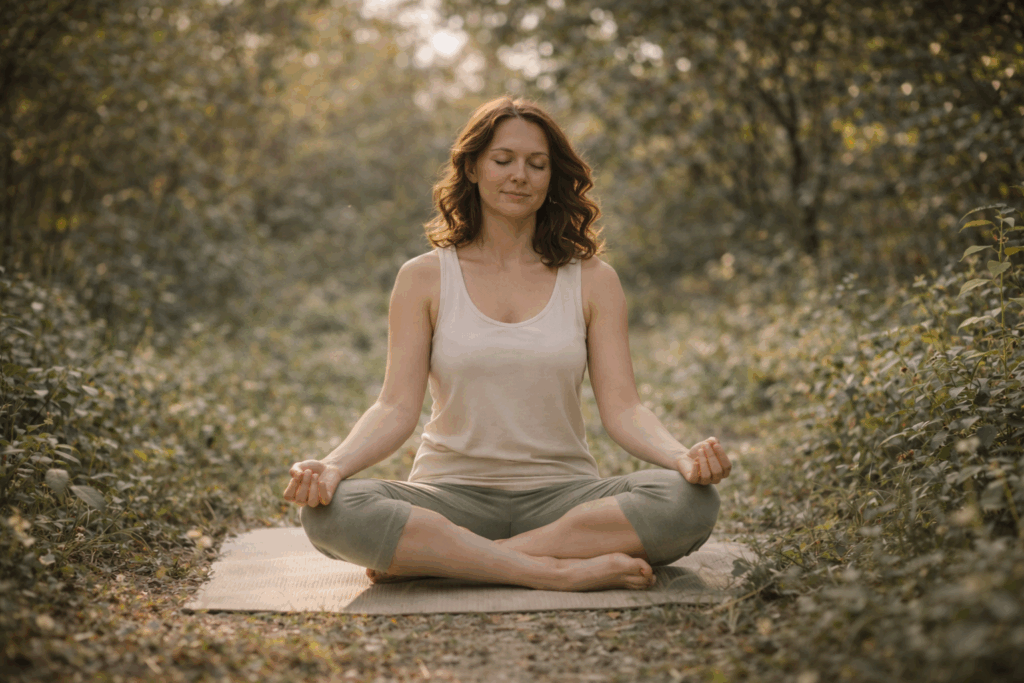
Moving gently does not mean moving constantly.
It means moving with your body instead of against it.
Movement, Aging, and Capacity
Gentle movement is also an act of longevity.
It preserves mobility without depletion.
It supports joints, circulation, and balance.
And it adapts to changing capacity rather than fighting it.
This is not about doing less forever.
It’s about honoring where you are now.
How to Practice Moving Gently
To work with this guidepost:
- Slow down transitions
- Notice what your body enjoys
- Follow comfort rather than goals
- Stop before exhaustion
- Allow rest to be part of movement

Gentleness builds capacity over time.
Integration: Movement as Care
The guidepost “Move Gently” reminds us that movement is medicine — and it does not need to hurt to help.
Your body is not a machine to be pushed.
It is a relationship to be tended.
Gentle movement is not weakness.
It is wisdom.
Continue the Practice
If this guidepost resonated, you’re invited to continue exploring it at your own pace.
🎧 Listen to the companion podcast episode:
→ The PlayFULL Way — Move Gently
(Available wherever you listen to podcasts)
📝 Download the reflection + journaling pages:
A gentle printable to help you pause, reflect, and integrate this week’s guidepost.
→ Subscribe & Request the Move Gently Guide
💌 Receive the weekly companion letter:
A short note each week with reflections, prompts, and invitations to practice slowly and honestly.
→ Weekly Newsletter Subscription
There’s no right way to engage.
Take what supports you. Leave the rest.