

Expanding Through New Ideas, Experiences, and Possibilities
There are seasons when staying open—when openness to experience—comes easily.
Life feels spacious. Curiosity flows. New ideas feel energizing rather than threatening. You’re able to listen, adapt, and explore without bracing.
And then there are seasons when openness feels impossible.
After loss. After disappointment. During prolonged uncertainty or pain. Or in moments when staying open costs too much.
In those seasons, closing makes sense.
This guidepost isn’t here to judge that.
It’s here to gently explore what openness actually is—and how it can return without forcing yourself into vulnerability you’re not ready for.
Because staying open doesn’t mean staying exposed.
It means staying available—to yourself, to learning, to life—at a pace your nervous system can tolerate.
Openness to Experience Is Not the Same as Vulnerability
From a nervous system perspective, openness to experience emerges when there is enough safety to remain curious without feeling exposed.
These words often get tangled together, but they are not the same.
Vulnerability is about exposure.
Openness to experience is about orientation.
You can be open without sharing everything.
You can be open while still having boundaries.
And, you can be open while moving slowly.
Staying open doesn’t ask you to give more than you have.
It asks you not to shut yourself off entirely.
Openness is the willingness to stay in relationship—with your inner world and the world around you—even when certainty isn’t available.

Why We Close (and Why It Makes Sense)
We don’t close because we’re rigid or resistant.
We close because something hurt.
Something overwhelmed us.
Something disappointed us.
And something asked more than we could give.
The nervous system learns quickly. It remembers moments when openness led to pain and adapts to prevent that pain from happening again.
Closing becomes a form of protection.
So if staying open feels difficult, it doesn’t mean you’re failing at growth. It means your system learned how to survive.
This guidepost honors that.
Openness to Experience as a Nervous System Practice
Openness is not a mindset you force.
It’s a state that emerges when there’s enough safety.
When the nervous system feels regulated, curiosity becomes possible. When it doesn’t, openness can feel like danger.
That’s why telling yourself to “just be open” rarely works.
Instead, openness grows when:
- You feel grounded in your body
- You trust that you can pause or leave if needed
- You know you don’t have to decide right away
Staying open is less about pushing forward and more about staying present.

The Cost of Closing Completely
Closing protects—but it also limits.
When we close entirely, we may stop feeling pain, but we also stop feeling possibility. We miss nuance. We miss surprise. And, we miss the slow unfolding of understanding that happens when we allow ourselves to stay engaged.
Closing can keep us safe in the short term—but over time, it can lead to numbness, rigidity, or isolation.
Staying open doesn’t mean ignoring risk.
It means staying responsive rather than reactive.
Openness and the Learning Spiral
This guidepost sits beautifully on the learning spiral.
Staying open allows us to revisit ideas, relationships, and experiences from new places.
You may encounter the same lesson again—not because you failed to learn it before, but because you’re meeting it with more capacity now.
Openness makes learning iterative, not linear.
You don’t have to get it right the first time.
You don’t have to resolve everything at once.
You’re allowed to circle back.
Staying Open in Relationships
In relationships, staying open can feel especially vulnerable.
It might mean:
- Listening without immediately defending
- Staying present when something feels uncomfortable
- Allowing repair instead of shutting down
- Remaining curious about another person’s experience
This doesn’t mean tolerating harm or abandoning boundaries.
It means staying open to information, not obligation.
You get to choose how you respond.
Staying Open With Yourself
Sometimes the hardest openness is inward.
Staying open to:
- Feelings you’d rather avoid
- Needs you’ve ignored
- Parts of yourself you learned to silence

This guidepost invites you to notice where you’ve closed off from yourself—not with blame, but with compassion.
What did that closure protect you from?
What might it be ready to soften now?
You don’t have to pry anything open.
You only have to notice.
When Openness Feels Unsafe
If staying open feels threatening, pause.
Ask yourself:
- What am I afraid will happen if I stay open?
- What did openness cost me in the past?
- What would make openness feel safer now?
Sometimes staying open looks like taking a step back rather than forward.
You’re allowed to titrate openness.
You’re allowed to open a little, then rest.
And you’re allowed to close again if needed.
That flexibility is openness.
A Gentle Practice for Staying Open This Week
This week’s practice is subtle.
Rather than seeking new experiences, try noticing where you’re already being invited to stay open.
This is a practice of openness to experience, not a demand for change.
You might:
- Pause before saying no
- Listen a little longer
- Allow an idea to sit without deciding
- Notice when curiosity arises and let it linger
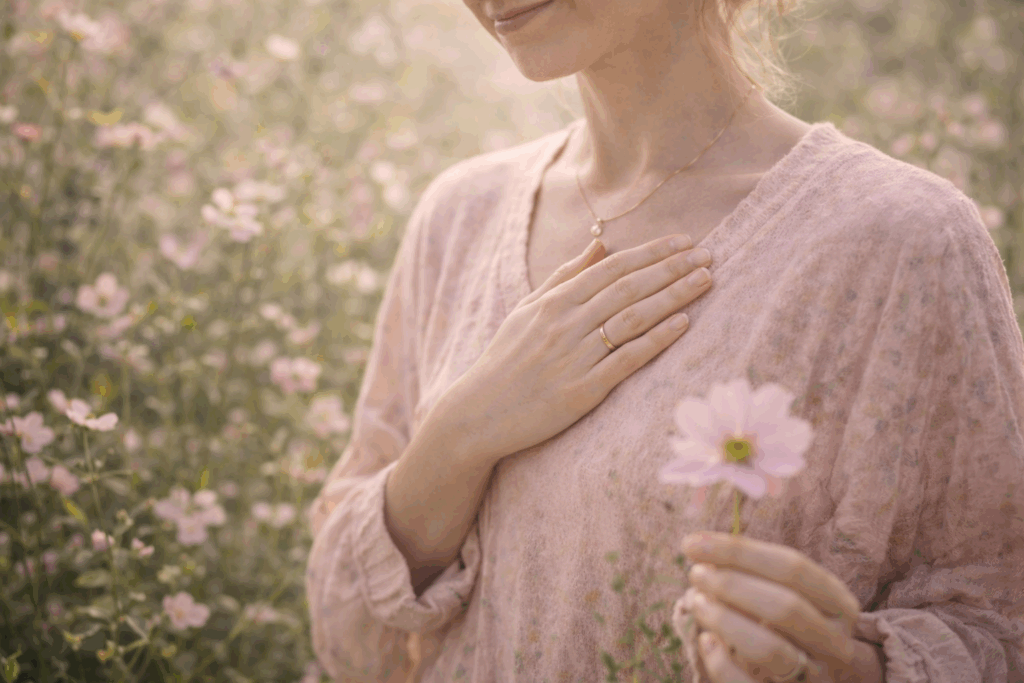
You don’t have to act on every invitation.
Just have to let them exist.
Openness begins with noticing.
Integration: Openness as Capacity
Staying open isn’t about pushing through fear.
It’s about expanding capacity.
Capacity grows when we:
- Move slowly
- Stay connected to the body
- Trust ourselves to pause or stop
You don’t need to force growth.
Growth happens when openness feels supported.
Closing Reflection
Staying open doesn’t mean staying unguarded.
It means staying willing—to learn, to adjust, to meet yourself and the world as it is.
You’re allowed to open at your own pace.
You’re allowed to close when needed.
And you’re allowed to trust yourself to know the difference.
Continue the Practice
If you’d like to explore this guidepost further:
- 🎧 Listen to this week’s PlayFULL Way podcast episode, where we talk about openness, boundaries, and nervous system safety.
- 📨 Join the weekly newsletter for reflective prompts and gentle integration.
- 📄 Download the companion PDF pages to the journal and explore what staying open means for you.
You don’t have to decide everything today.
You only have to stay with yourself.
Listen to the Pause & Play Podcast here:
→ The PlayFULL Way — Stay Open
Join our weekly newsletter by clicking here:
→ Weekly Newsletter Subscription
Click here to Subscribe and Download the companion PDF pages: