

Why Quiet Time Supports Nervous-System Integration
Quiet time is often associated with meditation, discipline, or control.
But from a nervous-system perspective, stillness is about integration — giving the body time to process experience without new input.
The guidepost “Find Stillness” invites us to understand quiet time as a biological need, not a spiritual achievement.
Why Stillness Can Feel Threatening
For many people, stillness brings awareness.
And awareness can surface:
- Unprocessed emotion
- Physical sensations
- Grief
- Fatigue
- Unmet needs

When movement once protected you, stopping can feel risky.
This doesn’t mean stillness is harmful.
It means your nervous system learned to cope through motion.
Stillness vs. Shutdown
It’s important to distinguish these clearly.
Shutdown is a collapse response — numbing, dissociation, or withdrawal.
Stillness is present, aware, and connected.
Stillness allows sensation without overwhelm.
Shutdown removes sensation entirely.
If stillness tips into overwhelm, the dose is too high.
The Nervous System Needs Quiet Time
The nervous system integrates during moments of reduced stimulation.
Quiet supports:
- Emotional processing
- Memory consolidation
- Bodily awareness
- Repair and recovery
- Clarity
Without quiet time, the system stays reactive.
Stillness in Motion
Stillness does not always mean stopping.
It can exist within:
- Slow walking
- Gentle stretching
- Repetitive tasks
- Mindful movement
- Quiet presence
Stillness is a quality, not a posture.
Stillness After Trauma
After trauma, stillness can be challenging.
The nervous system may associate quiet with danger or vulnerability.
In these cases, stillness must be:
- Brief
- Optional
- Paired with grounding
- Chosen, not imposed
Safety comes first.
How to Practice Stillness Gently
To work with this guidepost:
- Start with seconds, not minutes
- Keep your eyes open if needed
- Anchor in the body
- Stop before overwhelm
- Allow movement afterward
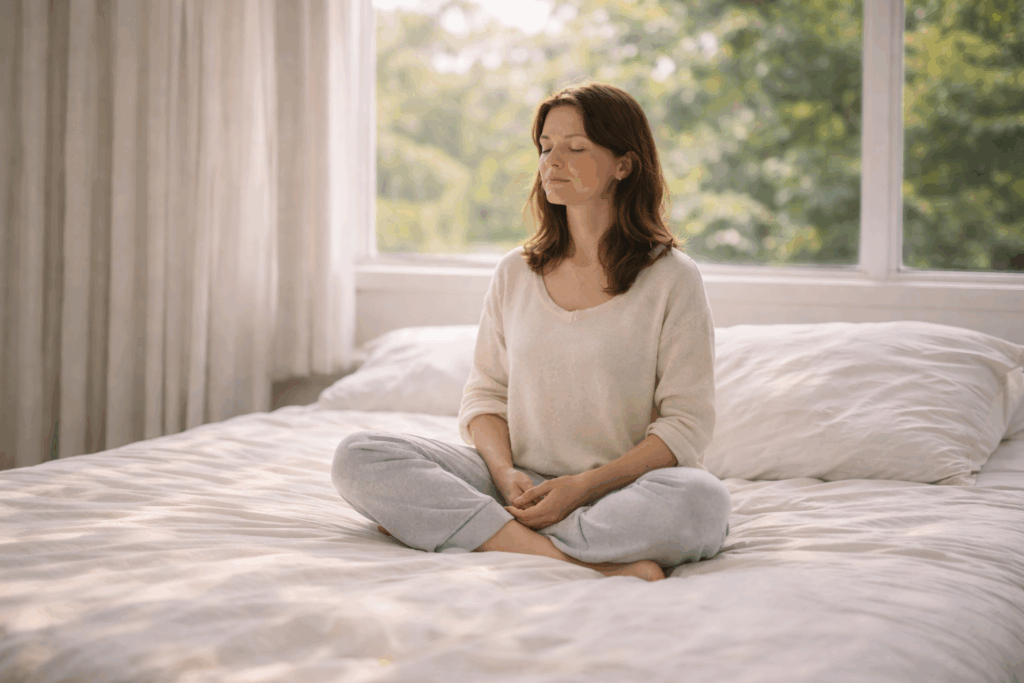
Stillness grows with trust.
Integration: Quiet Time as Care
The guidepost “Find Stillness” reminds us that integration requires space.
You don’t need to empty your mind.
You need to let your body catch up.
Stillness is not an achievement.
It’s a resource.
Continue the Practice
If this guidepost resonated, you’re invited to continue exploring it at your own pace.
🎧 Listen to the companion podcast episode:
→ The PlayFULL Way — Find Stillness
(Available wherever you listen to podcasts)
📝 Download the reflection + journaling pages:
A gentle printable to help you pause, reflect, and integrate this week’s guidepost.
→ Subscribe & Request the Find Stillness Guide
💌 Receive the weekly companion letter:
A short note each week with reflections, prompts, and invitations to practice slowly and honestly.
→ Weekly Newsletter Subscription
There’s no right way to engage.
Take what supports you. Leave the rest.