

Why Renewal Is Essential For Nervous System Healing, Balance, and a Sustainable Life
Allow yourself to rest—because rest is one of the most misunderstood needs in modern life.
Culture often treats rest like a luxury, a reward, or an optional self-care upgrade. Something you do when there’s extra time, when the house is quiet, when the to-do list is done, when the children are asleep, when the crisis passes, when you finally catch up.
But your body doesn’t experience rest as optional.
From a nervous system perspective, rest is not indulgence. It supports regulation, enables repair, and creates the rhythm that sustains human life.
The guidepost Rest invites us to reclaim rest as a core practice — not because we’re weak, but because we’re human.
Why It Can Feel So Hard to Allow Yourself To Rest (Even When We Need It)
Many people don’t avoid rest because they don’t want it. They avoid it because rest has become emotionally complicated.
Rest can trigger guilt. It can bring up fear. It can feel undeserved. Some of us never saw rest modeled. For others, rest was unsafe — the moment you stopped, someone needed you, something went wrong, or you were criticized for not doing more.
So the nervous system learned a rule:
Movement equals safety. Stillness equals danger.
That rule doesn’t disappear just because the circumstances change. It softens over time through lived experience — through practicing rest in ways the body can actually tolerate.
If rest feels hard, it’s not a character flaw. It’s a pattern your body learned.

Rest Is Where the Nervous System Repairs
Your nervous system is designed to move through cycles: activation and recovery, effort and rest, focus and release.
Chronic stress interrupts that rhythm.
When life is demanding — emotionally, financially, relationally, physically — the nervous system adapts by staying “on.” Even when you’re sitting still, your body may remain braced: jaw tight, shoulders lifted, breath shallow, thoughts racing, internal vigilance humming in the background.
That’s not because you’re broken. It’s because your system learned it needed to stay ready.
Rest is how the body learns it doesn’t have to stay ready all the time.
Rest supports:
- Downshifting out of chronic activation
- Processing stress chemistry
- Emotional integration
- Improved sleep and digestion
- Increased capacity for connection
- Clearer thinking and decision-making

This is why rest is not “doing nothing.” It’s doing something deeply intelligent: letting your system recalibrate.
Rest Is Not the Same as Collapse
A key distinction in this guidepost is the difference between rest and collapse.
Collapse occurs when the body is pushed beyond its capacity. It looks like zoning out, shutting down, numbing, losing motivation, feeling heavy, or scrolling for hours without relief. Collapse is not failure — it’s the nervous system protecting itself when it cannot sustain activation any longer.
But collapse is not always restorative.
Restorative rest tends to feel nourishing, even if it’s unfamiliar. It supports your body in softening rather than freezing. It may be quiet, but it’s not necessarily numb.
Both collapse and rest are messages. The question is not “Which one is morally better?” The question is:
What is my body asking for — and how can I respond with care?
Sometimes the first step toward restorative rest is simply acknowledging exhaustion without shame.
Different Types of Rest (And Why One Size Doesn’t Work)
Many people think rest means sleep. Sleep matters — deeply — but it’s not the only form of recovery. Sometimes you’re sleeping and still tired because what you need is emotional rest, mental rest, or sensory rest.
Here are a few types of rest to consider:
Physical rest
Sleep, naps, lying down, slower pacing, and less physical output.
Mental rest
Fewer decisions. Less information, planning, and multitasking.
Emotional rest
Permission to feel without performing. Boundaries around caretaking. Space from emotional labor.
Sensory rest
Reduced noise, screen time, bright lights, and chaotic environments. More softness and simplicity.
Relational rest
Being with someone safe. Or being away from people who drain you. Resting from performing, explaining, or managing impressions.
Learning what kind of rest you need is part of nervous system literacy. It’s also part of self-trust.
Why Rest Can Make You Feel Worse Before It Feels Better
A common experience: you finally stop, and suddenly you feel anxious, sad, or unsettled.
This can be confusing. You might think: “Rest isn’t working. I’m doing it wrong.”
But from a nervous system perspective, this makes sense.
When your system is moving fast, it can keep emotions at bay. Stillness removes the distractions. The body finally has room to register what it has been holding.
This is often where people abandon rest—right when the body begins to process.
If this happens, the goal is not to force deeper stillness. The goal is to titrate — to dose rest in gentle, tolerable amounts.
Try:
- Resting for 2 minutes instead of 20
- Adding a grounding cue (hand on heart, feet on floor)
- Pairing rest with safety (warm drink, soft blanket, calming sound)
- Resting with eyes open
- Resting near a window or in a familiar space
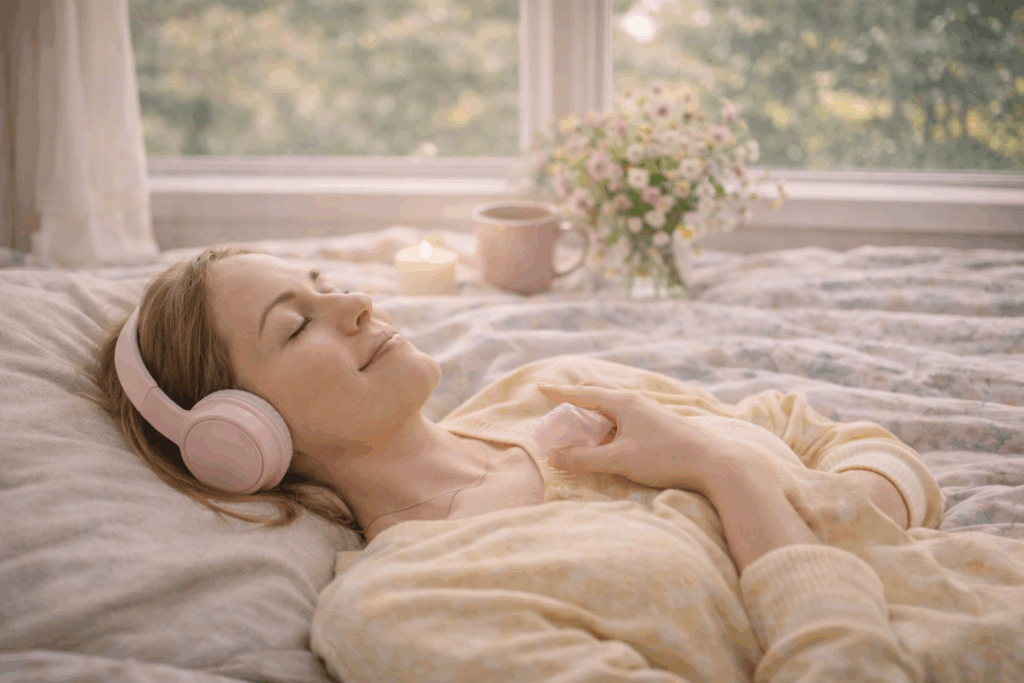

Rest is a skill. Your body learns through repetition.
Rest and Identity
For many people, the deepest barrier to rest is identity.
If your worth has been tied to productivity, competence, caretaking, or resilience, then rest can feel like losing yourself.
This is not dramatic — it’s nervous-system real.
When you’ve survived by being the capable one, the strong one, the one who holds it together, your body may interpret rest as danger: “If I stop, I’ll lose control. If I rest, I’ll be left behind. If I slow down, I won’t be needed.”
Rest invites a different identity:
- A person who is allowed to be human
- A person who can receive
- A person whose worth is not conditional
This shift takes time. But it’s also where healing deepens.
Rest in Parenting and Caregiving
If you are a caregiver, rest often feels impossible.
There are real constraints: children, work, schedules, financial strain, and responsibilities that cannot be ignored.
This guidepost is not asking you to pretend those constraints aren’t real.
It’s inviting you to allow yourself to rest in small, possible ways.
It’s asking you to look for micro-rests and relational support—small, repeatable moments that help your nervous system recover, even within a full life.
Micro-rest can look like:
- Sitting for 60 seconds with your shoulders down
- Breathing out longer than you breathe in
- Resting your eyes
- Letting your body lie down when the opportunity arises
- Making one task optional instead of mandatory
- Reducing one form of input (one less errand, one less screen, one less “should”)
Rest also models something essential for children: self-respect. When adults practice rest without shame, children learn that care is normal.
A Gentle Rest Practice You Can Try This Week
If you want something concrete, try this:
The 3-Minute Downshift
- Put one hand on your chest or belly.
- Inhale normally. Exhale slowly, like you’re fogging a mirror.
- Look around the room and name three neutral things you see.
- Let your jaw unclench. Let your shoulders drop one inch.
- Whisper (or think): “I don’t have to brace right now.”

This isn’t magic. It’s repetition. It’s the nervous system learning that it can soften without danger.
Integration: Rest Is the Rhythm That Holds Your Life
The guidepost Rest is not asking you to become less ambitious.
It’s asking you to adopt a sustainable approach.
Rest doesn’t take life away from you.
It gives your life back to you — one regulated moment at a time.
Allow yourself to rest before you collapse.
Allow yourself to rest without earning it.
And, allow yourself to rest to build a life that doesn’t require constant resilience.
Continue the Practice
If this guidepost resonated, you’re invited to continue exploring it at your own pace.
🎧 Listen to the companion podcast episode:
(Available wherever you listen to podcasts)
📝 Download the reflection + journaling pages:
A gentle printable to help you pause, reflect, and integrate this week’s guidepost.
→ Subscribe & Request the Rest Guide
💌 Receive the weekly companion letter:
A short note each week with reflections, prompts, and invitations to practice slowly and honestly.
→ Weekly Newsletter Subscription
There’s no right way to engage.
Take what supports you. Leave the rest.